



Why does Inter want to anglicize the squad?
18/08/2026 12:02:47 给我擦皮鞋
 0
0  0
0After finalizing the signing of right-back Djed Spence from Tottenham for around €31.5 million, Inter are pushing ahead with the acquisition of Liverpool midfielder Curtis Jones, a target they have pursued for several months.
If this deal goes through, as many as three English players will have arrived at Inter this summer. Before Spence, John Stones joined from Manchester City on a free transfer. Along with Manuel Akanji, who also arrived from City officially after the buy option was triggered, Inter has never been this English-oriented. The question is: why is Inter now so keen on English players?
The prestige of "Premier League goods"
In recent years, it has become common for Serie A to recruit from the Premier League, even if they can mostly only sign players who have fallen out of favor or are not highly rated. Players like Fikayo Tomori, Christian Pulisic and especially Olivier Giroud at Milan, Scott McTominay at Napoli, Che Adams at Torino, and Ademola Lookman at Atalanta have all elevated their teams. Inter itself has succeeded with Romelu Lukaku (2019-2021) and more recently Akanji, who was discarded by Manchester City but became an irreplaceable pillar under coach Cristian Chivu. There have also been failures, such as Tammy Abraham (Roma, Milan) and Douglas Luiz (Juventus), but they are fewer.
It is not that Premier League players are inherently superior, but what makes them attractive lies in the environment where they are trained and play, where speed, intensity, transition ability, and physical pressure are typically very high. Spence is an example. This full-back had no guaranteed spot at Tottenham, even being loaned out multiple times, yet he was called up to the England squad for the 2026 World Cup and played in every match. This means coach Thomas Tuchel sees him not as a great player, but as someone more suited to specific tactical ideas than big names like Trent Alexander-Arnold.
Surely Inter has looked at it the same way when bringing in this player to replace the departed Denzel Dumfries, and that also answers the question of why Inter craves Curtis Jones so much, even though he is only a backup at Liverpool. Jones's intensity, flexibility, and ability to fulfill multiple roles in the game do not always create obvious highlights, but they are extremely important for a team's collective operation.
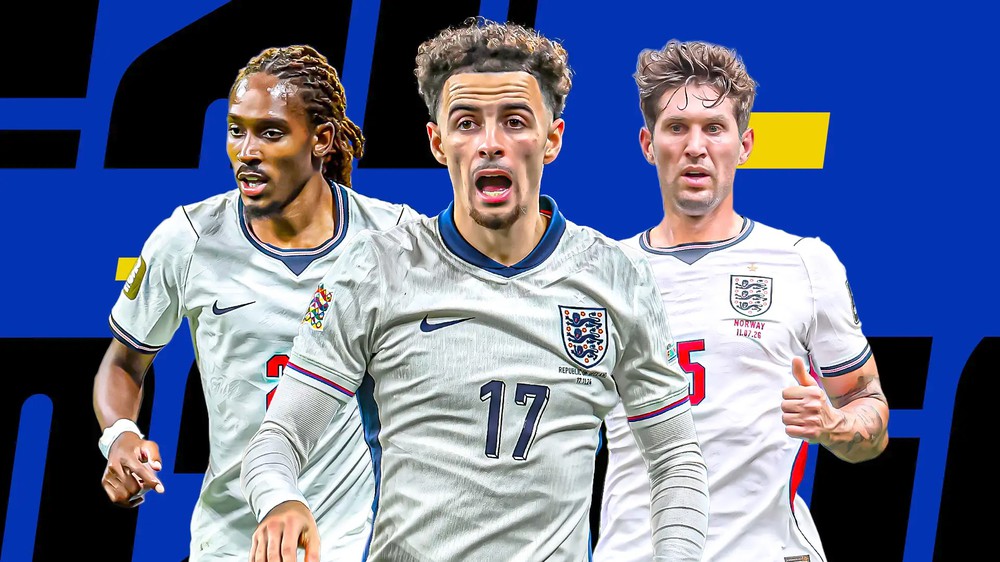
Inter is actively "anglicizing" the squad
Bringing Inter closer to Premier League quality
If Inter had bought only one Premier League player, it would be hard to call it a trend. But with Akanji already proving his worth, Stones arriving, Spence joining, and Jones being pursued, the formation of a group of players with English football experience at the reigning Serie A champions is clearly noteworthy.
Interestingly, Inter does not actually need the Premier League to prove they can compete in the Champions League. In recent years, the Nerazzurri have reached the final of that competition twice without any English players. Perhaps what Inter aims for with this summer's "Anglicization" wave is to expand their tactical thinking through players who are truly accustomed to high-speed, high-intensity football, thereby improving the weaknesses that have become ingrained stereotypes of Italian football, such as being too slow and too heavy.
If Jones arrives, Inter could field a "English quartet" consisting of Akanji, Stones, Spence, and Jones, who would have a decisive influence on both defense and attack on the right side of the formation, certainly creating new dynamics compared to before. Whether it will succeed remains to be seen, but their experience and physical ability are a promise that the trust placed in them is well-founded.
Chivu wants to leave his own mark
Coach Chivu's success in Serie A last season is widely acknowledged. He proved he has enough talent to maintain Inter's status and enough nerve to overcome pressure and doubts. But he has not yet shed the "successor" label. The 3-5-2 formation from his predecessors and the core group of players who have fought together for years remain the fundamental strength. Inter's Serie A title was built on overpowering smaller teams rather than asserting dominance against big opponents, and being eliminated early from the Champions League by a lesser side like Bodo/Glimt is a stain that is hard to erase.
Therefore, if Chivu wants to do something different to prove he is not just a "fortunate heir," this is the right time. "Anglicization" is a new direction, generating considerable attention and could easily earn recognition if successful. After all, despite being strongly influenced by Italian football, Chivu is not Italian himself, and he wants to assert his philosophy of deeply integrating into the trend of globalization, rather than being confined to the outdated stereotypes people have about Italian football.
Inter's pre-season training camp witnessed a paradox: no striker scored, even though the attack is where Inter is overwhelmingly stronger than all Serie A rivals. The goals in Inter's five friendlies were scored by midfielders (Diouf 3, Dimarco 2) and defenders (Pavard 1, Stones 1). Ange-Yoan Bonny and Pio Esposito each had one assist, but coach Cristian Chivu clearly wants more.
However, the reason also lies in the fact that the best striking duo, Lautaro Martinez and Marcus Thuram, were both absent due to post-2026 World Cup holidays. Lautaro only played 20 minutes in the match against Betis, while Thuram has not taken the field at all.


Wonderfulshortvideo

mbappe news mbappe edit mbappe new shoe boot deal mbappe nike



julian alvarez barcelona news
James Trafford’s big moment in the U21 EURO final 🤯

RODRI BARCELONA transfer barcelona news today rodri to barcelona transfer here we go

gianni infantino and trump drama news

jorge messi death messi news today football news today
jose mourinho netflix documentary pep guardiola mourinho beef mourinho edit
 Links
Links
 Contact