



The "Chinese Little Wolf" chasing dreams among the Central Asian wolf pack
17/08/2026 13:35:36 给我擦皮鞋
 0
0  0
0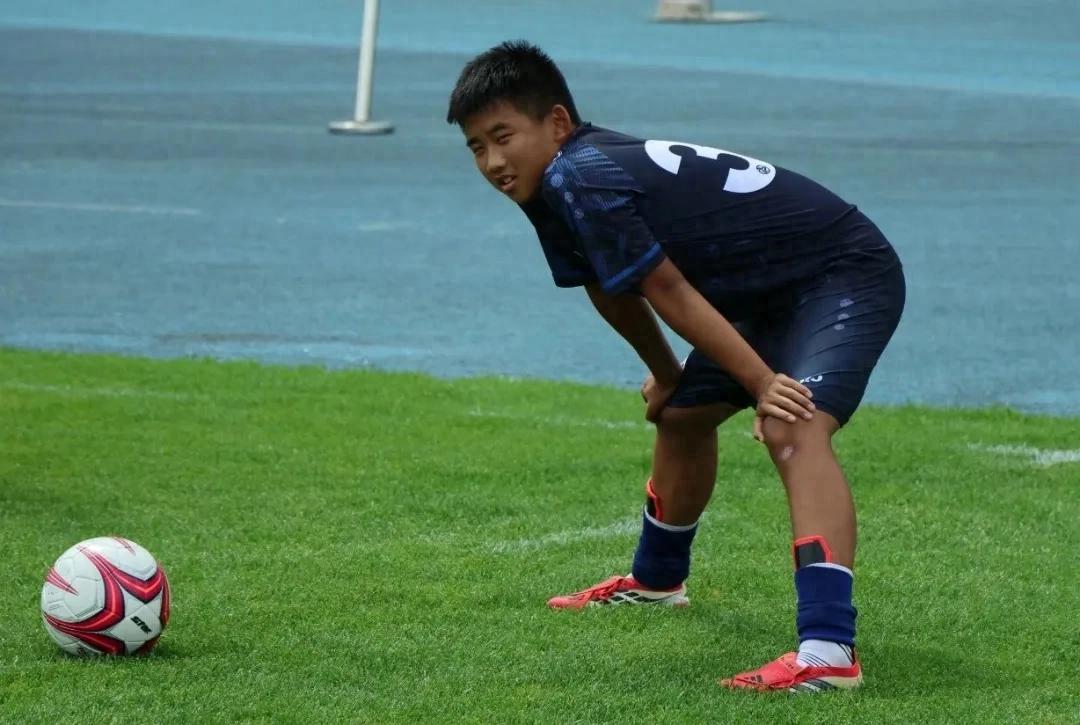
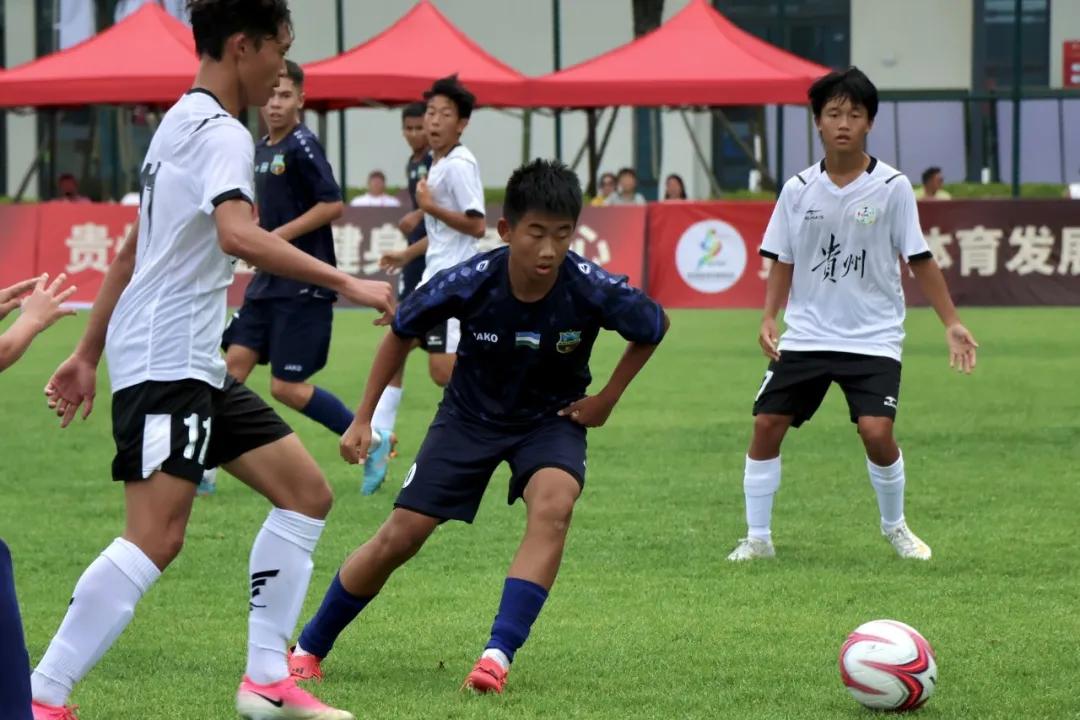
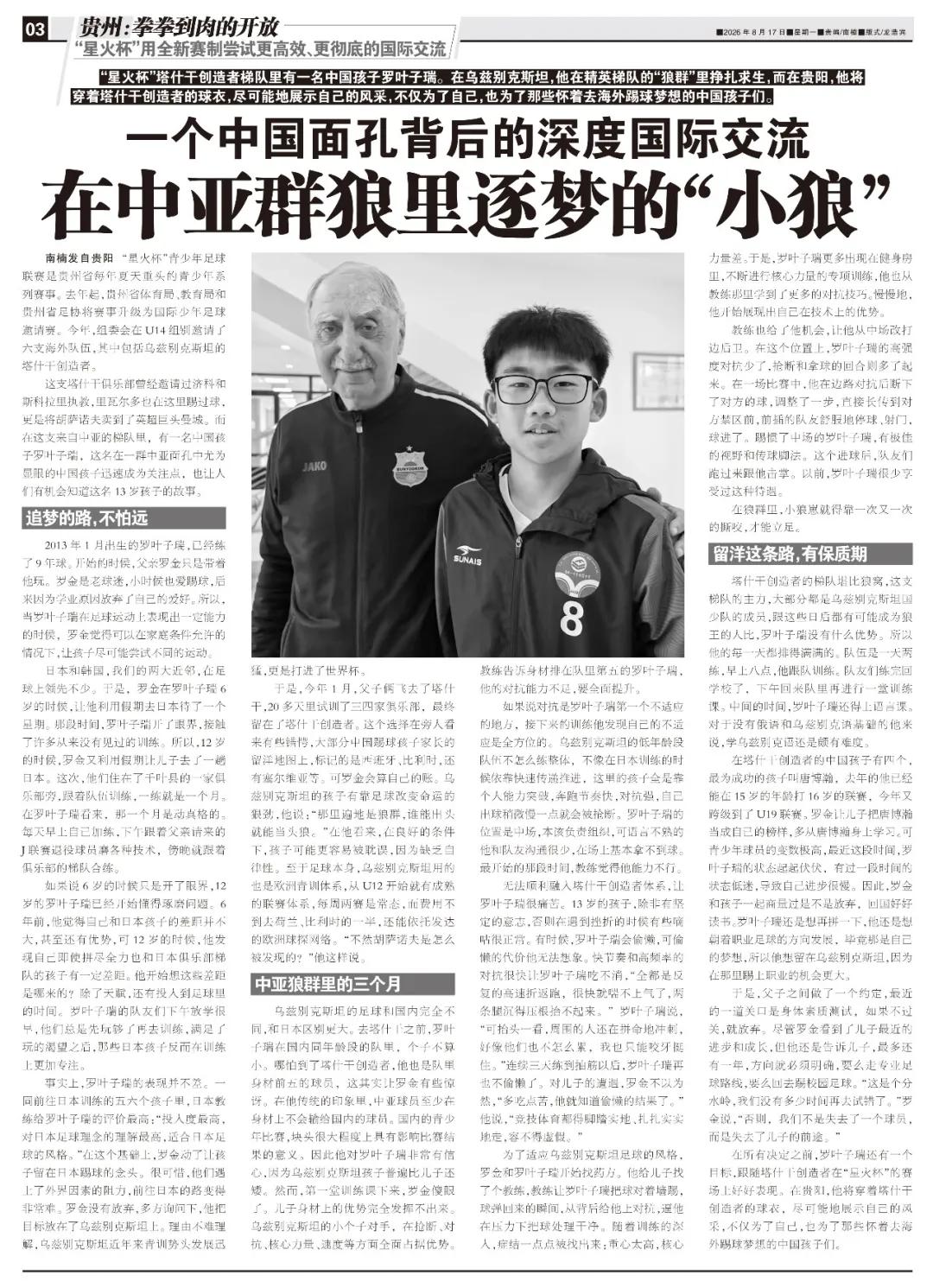
Nan Nan reports from Guiyang The "Spark Cup" Youth Football League is a major summer youth series in Guizhou Province each year. Starting last year, the Guizhou Provincial Sports Bureau, the Education Bureau, and the Guizhou Football Association have elevated the tournament to an International Youth Football Invitational. This year, six foreign teams were invited in the U14 division, one of which is Tashkent Creators from Uzbekistan.
Tashkent Club has previously invited Zico and Scolari as coaches, and Rivaldo also played there. They even sold Khusanov to Premier League giant Manchester City. In the Tashkent Creators youth team that came to Guizhou, a Chinese boy named Luo Yerui quickly became a focus of attention.

Born in January 2013, Luo Yerui has been training for nine years. At first, his father Luo Jin just took him to play. Luo Jin is a long-time football fan who loved playing as a child but gave up his hobby due to academic reasons. So when Luo Yerui showed some ability in football, Luo Jin felt that, if family finances allowed, he could let his child try different sports as much as possible.
Japan and South Korea, our two neighboring countries, are far ahead in football. So when Luo Yerui was six, Luo Jin sent him to Japan for a week during the holidays. During that time, Luo Yerui broadened his horizons and encountered training methods he had never seen before. So when he turned 12, Luo Jin took his son to Japan again during the break. This time, they stayed near a club in Chiba Prefecture, training with the team for a full month. In Luo Yerui's view, that month was serious business. He did extra training on his own every morning, polished various techniques with a retired J-League player hired by his father in the afternoon, and joined the club's youth team for practice in the evening.
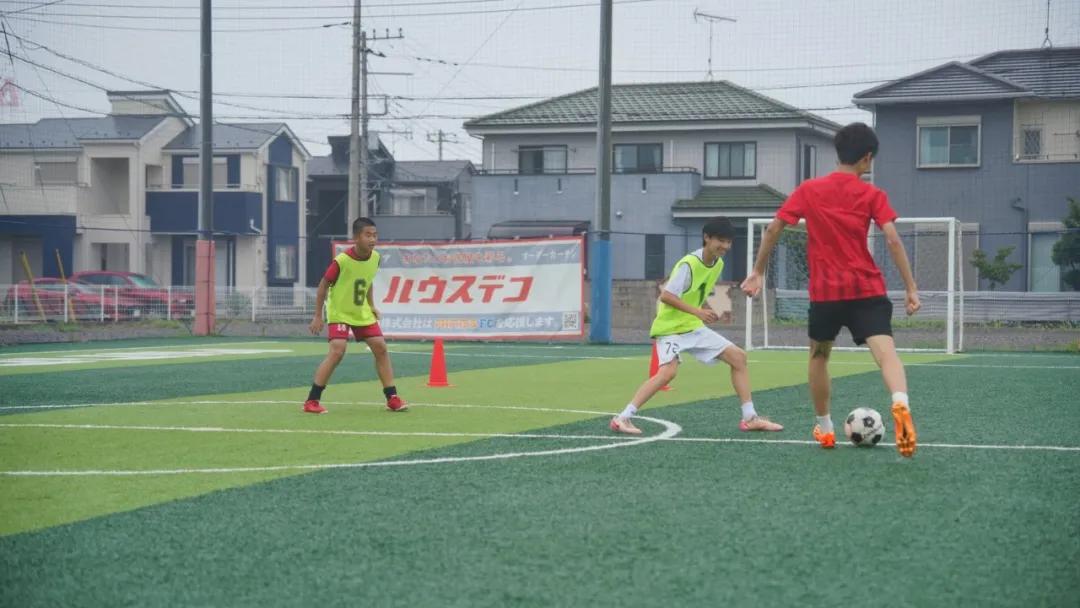
If at age six he only opened his eyes, at 12 Luo Yerui began to think and analyze problems. Six years ago, he felt the gap between himself and Japanese kids was not big, and he even had advantages. But at 12, he found that even when he gave his all, he still lagged behind the Japanese club youth players. He started wondering where the gap came from—besides talent, it was the time invested in football. Luo Yerui's teammates finished school early in the afternoon, and they always played enough before training. After satisfying their desire to play, those Japanese kids actually became more focused during training.
In fact, Luo Yerui's performance was not bad. Among the five or six kids who went to Japan for training, the Japanese coach gave Luo Yerui the highest rating: "Highest level of commitment, best understanding of Japanese football philosophy, and suited to the Japanese style of play." Based on this, Luo Jin once considered letting his son stay in Japan to play, but unfortunately it didn't work out. Luo Jin didn't give up. After asking around, he set his sights on Uzbekistan. The reason is easy to understand: Uzbekistan's youth training has been developing rapidly in recent years, and they even made it to the World Cup.
So in January this year, the father and son flew to Tashkent. Over 20 days, they tried out with three or four clubs and finally stayed with Tashkent Creators. This choice seemed surprising to others—most Chinese parents of young footballers have Spain, Belgium, or Serbia marked on their map of overseas dreams. But Luo Jin does his own calculations. Uzbek kids have a fierce determination to change their lives through football. He said, "It's a pack of wolves everywhere. Whoever can stand out becomes the alpha wolf."
In his view, under good conditions, a child is more likely to be held back due to lack of self-discipline. As for football itself, Uzbekistan also uses the European youth training system. From U12 onward, there is a mature league system with two matches per week as the norm. And the cost is less than half of going to the Netherlands or Belgium, while still being connected to the extensive European scouting network. "Otherwise, how do you think Khusanov was discovered?" he said.
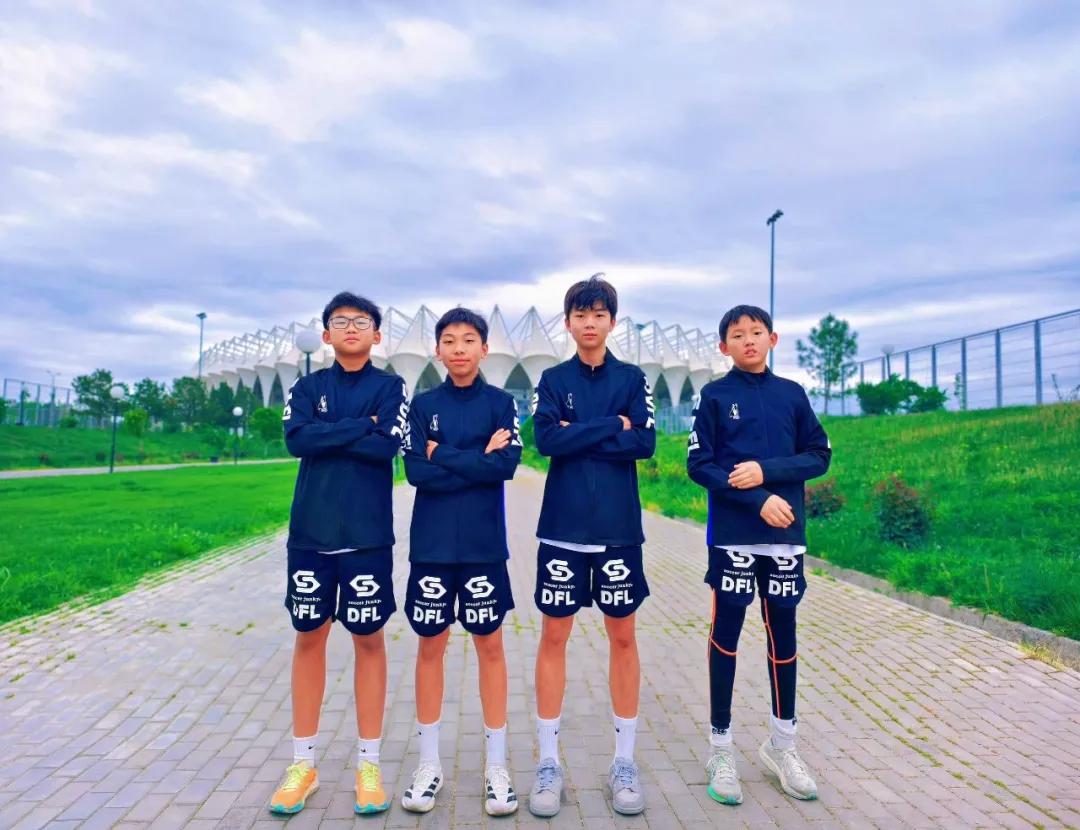

Football in Uzbekistan is completely different from that in China, and even more different from Japan. Before going to Tashkent, Luo Yerui was not small for his age in domestic teams. Even at Tashkent Creators, he was among the top five in height on the team, which actually surprised Luo Jin. In his traditional impression, Central Asian players at least wouldn't be shorter than Chinese players. In domestic youth matches, size often has a significant impact on the outcome. So he was very confident in Luo Yerui, because Uzbek kids were generally shorter than his son. However, after the first training session, Luo Jin was stunned. His son's height advantage was completely useless. The smaller Uzbek opponents dominated in tackles, physical duels, core strength, and speed. The coach told Luo Yerui, who ranked fifth in height, that his physicality was insufficient and needed overall improvement.
If physicality was the first thing Luo Yerui struggled with, the following training revealed that his discomfort was all-around. The younger age groups in Uzbekistan don't focus much on team play, unlike in Japan where they rely on quick passing to advance. Here, the kids all rely on individual skill to break through, with fast running pace and strong physical contact. If he was even slightly slow in releasing the ball, it would be intercepted. Luo Yerui's position is in midfield, where he should be organizing, but due to language barriers, he rarely communicated with teammates and basically never got the ball. In the beginning, the coach thought he wasn't good enough.
Being unable to integrate into the Tashkent Creators system made Luo Yerui miserable. For a 13-year-old, unless he has a strong will, it's normal to have doubts when facing setbacks. Sometimes Luo Yerui would slack off, but he couldn't imagine the cost. The fast pace and high frequency of physical battles quickly wore him out. "It was all repeated high-speed shuttle runs, and I was soon out of breath. My legs were so heavy I couldn't lift them," Luo Yerui said. "But when I looked up, everyone around was still sprinting desperately, as if they weren't tired at all. I just had to grit my teeth and hold on." After three consecutive days of training until he cramped, Luo Yerui never slacked off again. Luo Jin was not sympathetic to his son's ordeal. "If he suffers a bit more, he'll know the consequences of slacking off," he said. "In competitive sports, you have to be down-to-earth and solid. There's no room for shortcuts."
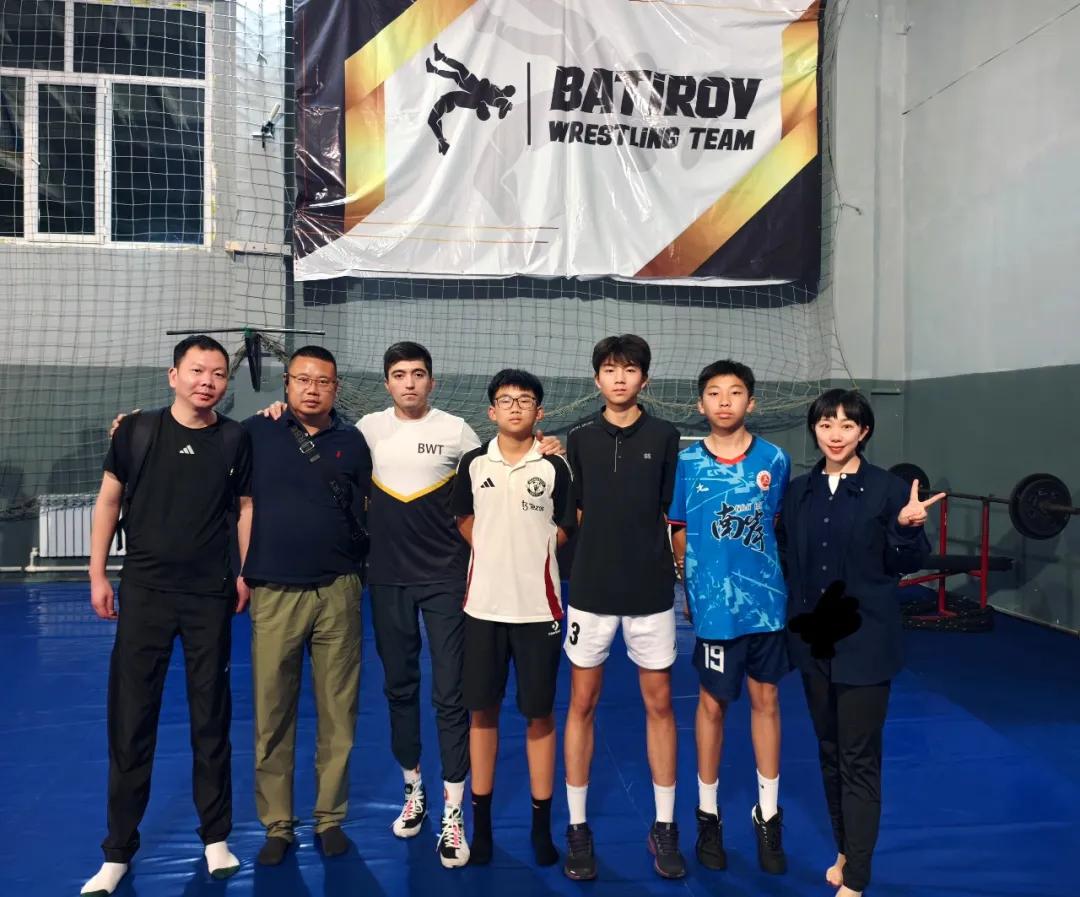
To adapt to the Uzbek football style, Luo Jin and Luo Yerui started looking for solutions. He hired a coach for his son, who had Luo Yerui kick the ball against a wall. The moment the ball bounced back, the coach would apply physical pressure from behind, forcing him to handle the ball cleanly under pressure. As training progressed, the root problems were gradually identified: a high center of gravity and weak core strength. So Luo Yerui spent more time in the gym, doing targeted core strength exercises, and learned more techniques for physical battles from the coach. Slowly, he began to show his technical advantages.
The coach also gave him a chance, switching him from midfield to full-back. In this position, Luo Yerui faced less intense physical confrontation, but had more tackles and touches on the ball. In one match, after a physical duel on the flank, he won the ball, adjusted one step, and sent a long pass directly to the edge of the opponent's penalty area. A teammate making a forward run controlled the ball comfortably and scored. Having played as a midfielder, Luo Yerui had excellent vision and passing technique. After this goal, his teammates came over to high-five him. Before, Luo Yerui had rarely enjoyed such treatment.
In a wolf pack, a cub has to bite and tear again and again to survive.
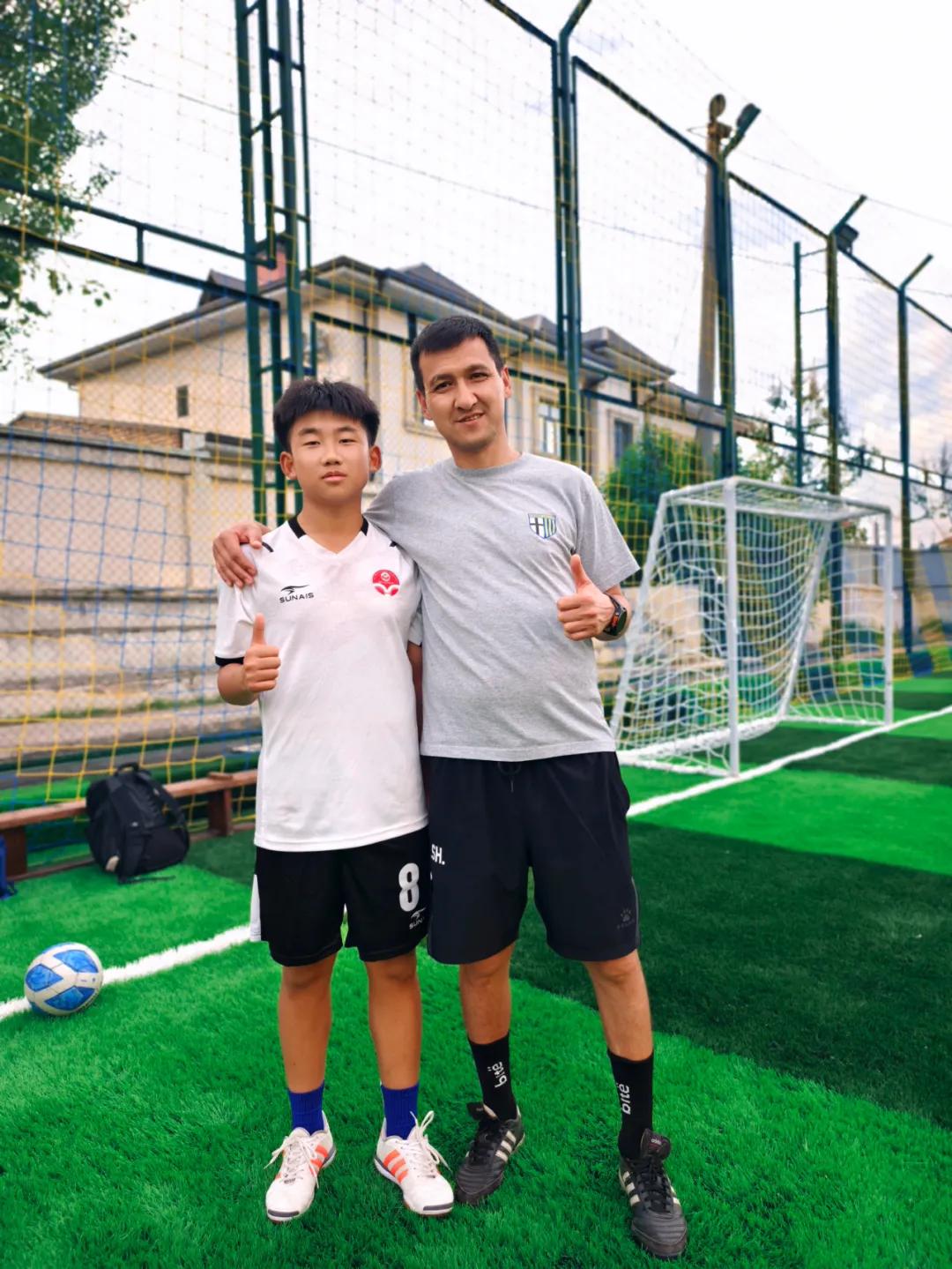

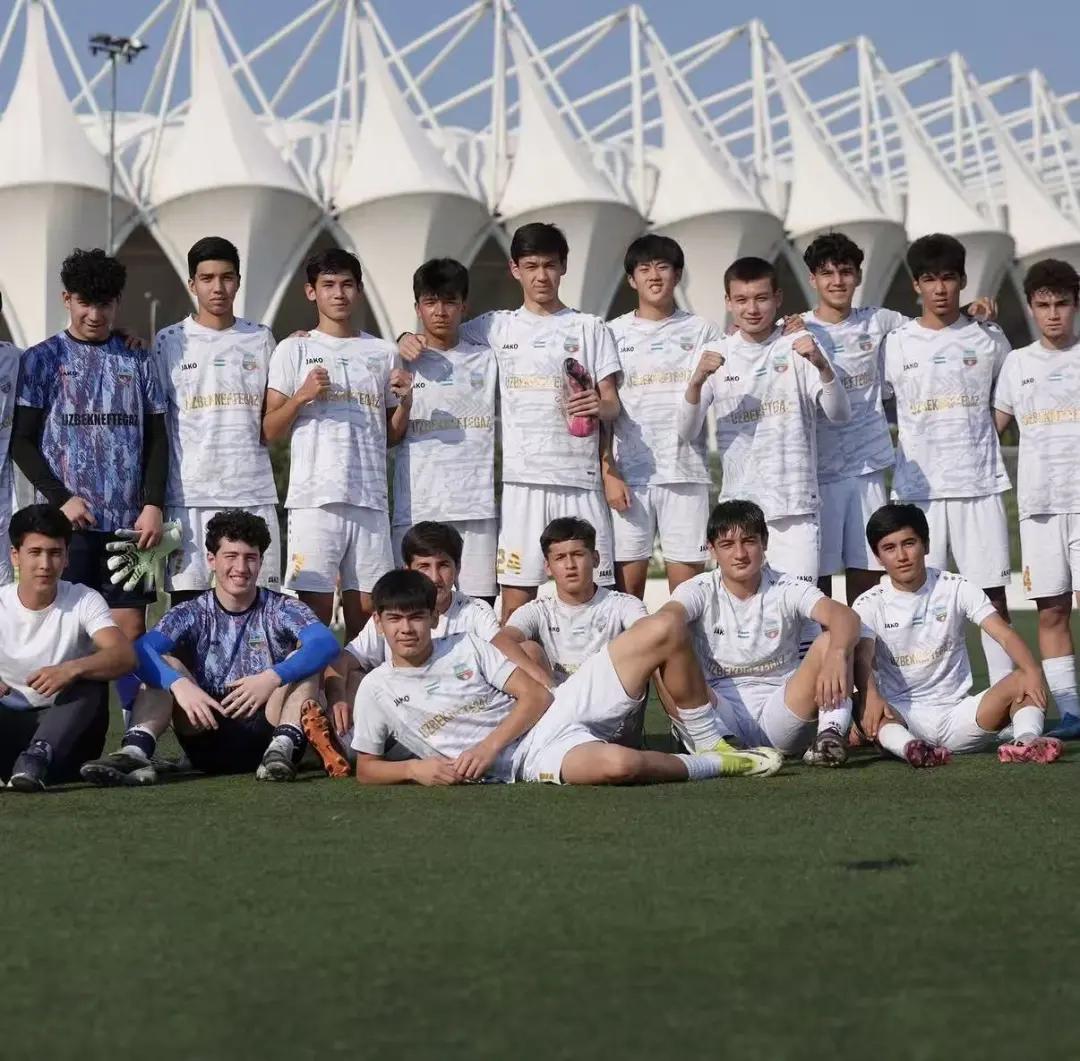
The youth team of Tashkent Creators is like a wolf's den. Most of the starters in this team are members of the Uzbekistan national youth team. Compared to these future wolf kings, Luo Yerui has no advantage. So his every day is packed. The team trains twice a day: at 8 a.m., he trains with the team. After training, his teammates go back to school, and then return in the afternoon for another session. In between, Luo Yerui also has language classes. For someone with no foundation in Russian or Uzbek, learning Uzbek is quite challenging.
There are four Chinese kids at Tashkent Creators. The most successful one is named Tang Bohan. Last year, at age 15, he was already playing in the U16 league, and this year he has jumped to the U19 league. Luo Jin tells his son to take Tang Bohan as a role model and learn from him. But young players are highly variable. Recently, Luo Yerui's performance has been up and down, with a period of poor form that slowed his progress. So Luo Jin discussed with his son whether to give up and go back to China for school. Luo Yerui still wants to give it one more shot. He still wants to pursue a professional football career—that's his dream. So he wants to stay in Uzbekistan, where the chances of turning pro are greater.
Thus, the father and son made a pact: the next hurdle is a physical fitness test. If he doesn't pass, they will give up. Although Luo Jin sees his son's recent progress and growth, he told him that at most one more year, and the direction must be clear: either go professional or go back to school football. "This is a watershed. We don't have much time left to make mistakes," Luo Jin said. "Otherwise, we won't lose just a player—we'll lose our son's future."
Before any final decision, Luo Yerui has one more goal: to perform well with Tashkent Creators at the "Spark Cup" tournament. In Guiyang, he will wear the Tashkent Creators jersey and show his best, not only for himself but also for all the Chinese kids who dream of playing football abroad.


Wonderfulshortvideo

mbappe news mbappe edit mbappe new shoe boot deal mbappe nike



julian alvarez barcelona news
James Trafford’s big moment in the U21 EURO final 🤯
RODRI BARCELONA transfer barcelona news today rodri to barcelona transfer here we go
gianni infantino and trump drama news

jorge messi death messi news today football news today
jose mourinho netflix documentary pep guardiola mourinho beef mourinho edit
 Links
Links
 Contact