



What is billionaire Jeff Bezos investing in Liverpool for?

13/08/2026 16:00:04 ChampionChatter
 0
0  0
0Billionaire Jeff Bezos is believed to see a huge profit opportunity from Liverpool, spanning broadcast rights, streaming, social media, and matchday revenue at Anfield, instead of just funding the signing of the top global stars.
The investment consortium led by businessman Amit Bhatia, which includes billionaire Jeff Bezos and Facebook co-founder Eduardo Saverin, is nearing a deal to acquire about one-third of Liverpool's shares for £1.5 billion.
The most notable figure in this consortium is Bezos – ranked by Forbes among the world's richest, with an estimated fortune of around £207 billion. Beside him is Eduardo Saverin, Facebook co-founder, whose wealth is reportedly about £24 billion.
In deals involving billionaires, the first reaction from fans is often predictable: the transfer market. A wealthy owner buys a club, and immediately fans think of blockbuster contracts, new superstars, and an era of dominance.
But with Liverpool and Jeff Bezos, The Telegraph suggests that fans should ask a different question: What does Jeff Bezos really want from Liverpool?
The answer might be much simpler: he sees money. A lot of money.
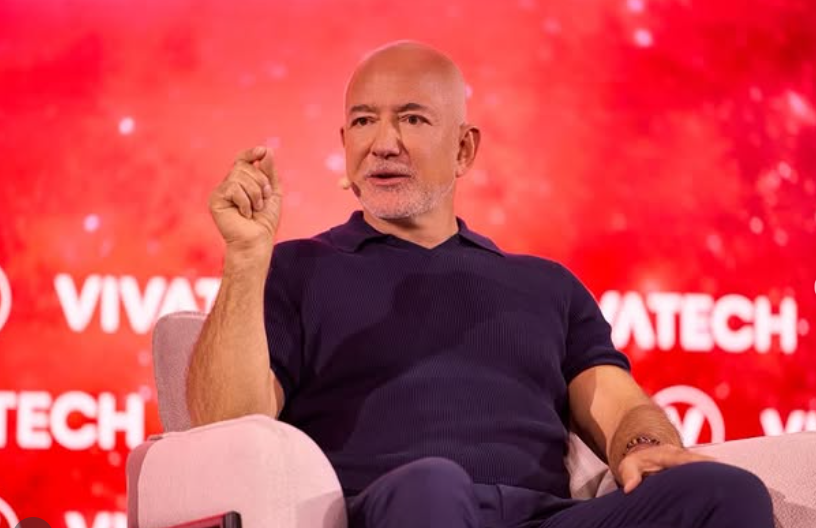
Billionaire Jeff Bezos is reportedly seeing a huge profit opportunity from Liverpool - Instagram photo.
Bezos isn't buying Liverpool out of love for football.
According to The Telegraph, it would be naive to think Bezos got involved in this deal because of childhood memories of John Toshack or Kevin Keegan.
This is an investment decision. What Bezos and his partners see is the opportunity to generate enormous profits from one of the world's biggest sports brands.
This also worries some Liverpool fans. Because if the main goal is profit, pouring hundreds of millions into the transfer market may not be part of the new investors' plans.
When FSG took over Liverpool in 2010, John W. Henry and Tom Werner often emphasized that they wanted to act as "custodians" of the club. FSG didn't buy Liverpool purely out of charity. Henry saw an investment opportunity that could turn a roughly £300 million outlay into a massive profit-generating asset. And reality has proven that.
FSG laid the foundation for a period of brilliant success. Appointing Jurgen Klopp, upgrading Anfield, breaking transfer records, and building a technical setup among the best in world football all helped Liverpool's value skyrocket.
Of course, FSG also made serious mistakes, notably their involvement in the European Super League project in 2021 and using the furlough scheme during Covid-19. But according to British media, FSG at least showed they were willing to admit mistakes when proven wrong.
With Bezos, that might not be so easy.
What makes this deal particularly noteworthy is the scale of the stake. Bhatia's group is not buying a small symbolic share. They are reportedly targeting around 30% of Liverpool shares. That's a large enough stake to have significant influence on the club's operations. In fact, this stake is larger than Sir Jim Ratcliffe's ownership at Manchester United, where the British billionaire already has a strong voice in football-related decisions.
So the question arises again: what do Bezos and his associates want? Currently, the parties are keeping details confidential as lawyers finalize the negotiations. The deal could be confirmed soon or drag into next week. But once the deal is approved, it's hard to imagine the new investment group just sitting back and observing.
One of the first targets the new investment group might consider is matchday revenue. Anfield currently has a capacity of about 60,000, and each home game is a huge revenue source. The question is: how to get each spectator to spend more?
John W. Henry was once surprised to see some local fans arriving at the stadium just a few minutes before kick-off and leaving immediately after the final whistle, instead of staying at Anfield to drink beer and use the club's services.
That's a big difference between English football culture and the American sports model. In the US, a sports day is often seen as a complete entertainment experience, and fans are willing to spend a lot of money.
For example, at Chicago's Wrigley Field: a beer costs about £15, a hot dog £6, chicken £12, while the cheapest ticket is around £38.5. That's the model American investors understand well. And if FSG saw the value of 60,000 seats at Anfield, Bezos, Saverin, and their partners certainly see the same. 60,000 seats are not just 60,000 people watching football. They are 60,000 potential customers.
Streaming and media rights are the real big game.
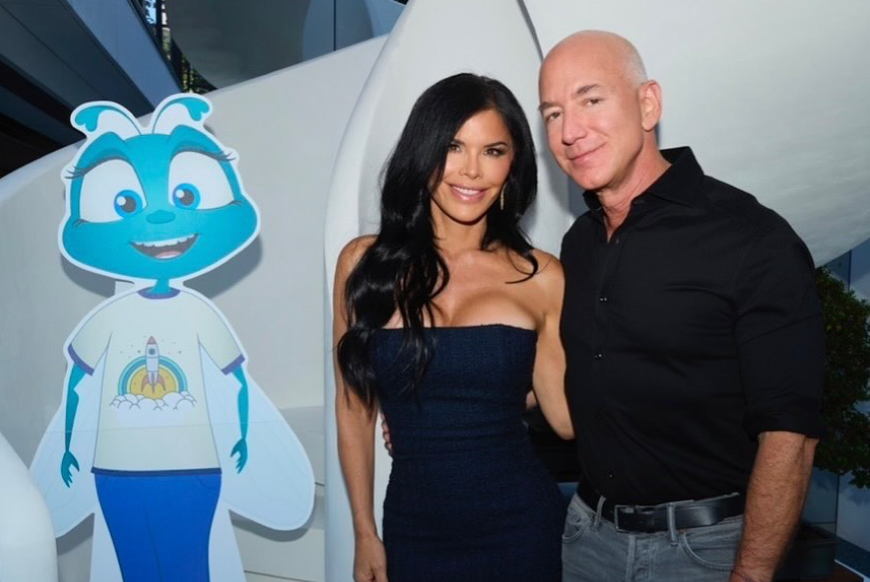
Bezos could help Liverpool become a global sports-entertainment-technology brand - Instagram photo.
If Bezos gets deeply involved in Liverpool, the area that could change most is not the transfer market but technology and media.
Bezos built Amazon into a global empire. Eduardo Saverin was also a key figure in the social media revolution with Facebook.
So they might see Liverpool from a very different angle. Not just a football club, Liverpool could become a global content platform. Streaming, social media, user data, e-commerce, media rights, exclusive content, and access to hundreds of millions of fans worldwide could all become new revenue streams.
That's where Bezos can make a difference.
This is the big gap between fan expectations and investor goals. Fans might dream of a Liverpool ready to spend hundreds of millions on Kylian Mbappe, Jude Bellingham, or a new-generation superstar. But the idea of spending money on players might not even have crossed Bezos and his associates' minds.
They might be more interested in turning Liverpool into a money-making machine. If successful, the indirect consequence could be that Liverpool has greater resources to compete in the transfer market.
Liverpool is going through a turbulent summer with changes in the coaching staff and the departure of icons like Mohamed Salah or Andrew Robertson.
In that context, the arrival of a new investment group could open a completely different chapter. But whether it will be a good chapter? No one can answer yet.
Bezos could help Liverpool become a global sports-entertainment-technology brand, exploiting Anfield, TV rights, streaming, social media, and the US market more aggressively.
But what Liverpool fans care most about remains simple: Will the team be stronger on the pitch?
Because for Bezos, the story might start with numbers on a balance sheet. But for Liverpool, ultimate value is still determined by what happens on the field. Liverpool's new era might not begin with a transfer "blockbuster". It could begin with a computer, a streaming platform, and a revenue spreadsheet.


Wonderfulshortvideo
mbappe news mbappe edit mbappe new shoe boot deal mbappe nike


julian alvarez barcelona news
James Trafford’s big moment in the U21 EURO final 🤯
RODRI BARCELONA transfer barcelona news today rodri to barcelona transfer here we go
gianni infantino and trump drama news
jorge messi death messi news today football news today
jose mourinho netflix documentary pep guardiola mourinho beef mourinho edit
 Links
Links
 Contact