



What do you see when Italy, a four-time world champion, misses the World Cup for the third consecutive time?

01/04/2026 12:01:09 SportScoop
 0
0  0
0Italy's third consecutive failure to qualify for the World Cup is undoubtedly the lowest point in the national team's history.
There are many reasons, too many to summarize in a few lines. The failure of the team led by Gennaro Gattuso accurately reflects the current state of Italian football: excessive reliance on individual players.
Once a dominant force in world football, Italy no longer holds that position. One of the biggest issues is the country's difficulty in producing top-tier stars in recent years. Since 2022, only Gianluigi Donnarumma has been nominated for the Ballon d'Or among Italian players—a number far too low compared to expectations.
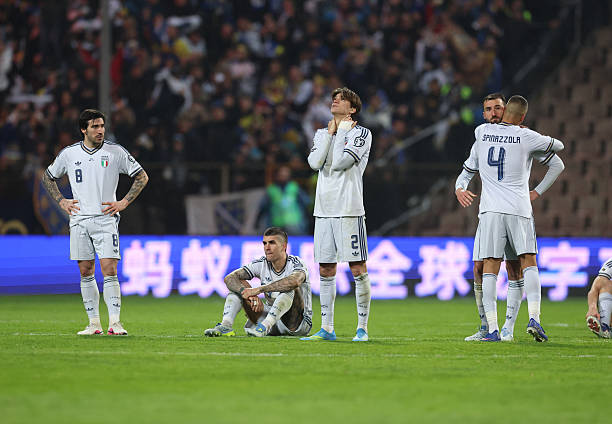
Italy loses to Bosnia in a penalty shootout, missing the 2026 World Cup finals
This can partly be explained by Italy's squad structure at the start of the decade. Winning UEFA Euro 2020 was a memorable achievement, but it also marked the farewell of a golden generation.
The defense was once built around the veteran duo Giorgio Chiellini and Leonardo Bonucci—experienced center-backs who considered keeping a clean sheet their greatest joy. In midfield, Marco Verratti and Jorginho played creative roles, with passing abilities that could dismantle opposing defenses. In attack, Ciro Immobile and Lorenzo Insigne, though past 30, still possessed the agility and technique to create breakthroughs in the penalty area.
However, none of these key pillars are present in this World Cup qualifying campaign. Instead, there is a collection of decent and average-level players who haven't reached the high caliber needed to make a clear impact on the international stage. This is precisely why Italy is gradually falling behind in global competition.
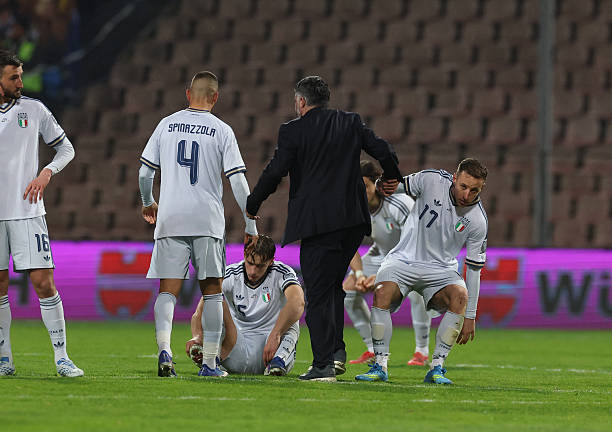
The disappointment of Italian players after the 2026 World Cup playoff final against Bosnia
After the glorious era of the 1990s, when Italians believed they could dominate the world, the rest of global football began working much harder. The Premier League is a prime example, having systematically built its brand and product, so that after 30 years, it became a success model that Italy itself must look to and learn from.
For many years, Italians relied on individual talent, and sometimes that worked. But when that talent pool gradually dried up, when everything began to depend on structure, discipline, and sustained effort, the cracks in the system immediately became apparent.
Italian football is lagging behind in almost every crucial aspect: outdated stadiums, poor infrastructure, limited financial resources, and perhaps most seriously, a lack of clear vision. It's no coincidence that young talents like Giovanni Leoni or Riccardo Calafiori choose the Premier League over staying at top Serie A clubs. When the system refuses to evolve, the most promising players are forced to seek other environments to develop.
After the penalty shootout loss to Bosnia and Herzegovina, Gattuso spoke emotionally about his responsibility, but he still deserves recognition. Unlike many previous coaches, he gained the trust of the entire nation and at times united the fans.
However, from here onward, things may become more chaotic. Therefore, the statement by the President of the Italian Football Federation, Gabriele Gravina, was even more surprising. He not only refused to resign but continued to support Gattuso staying, despite the failure. This approach seems to avoid deep structural issues rather than confronting them directly.
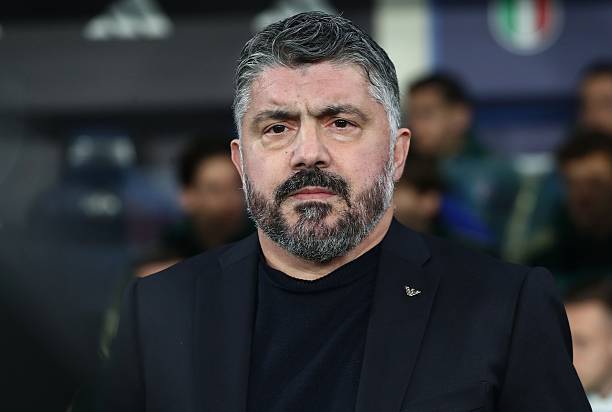
Coach Gennaro Gattuso cannot revive Italian football
Gravina was expected to leave his position in the coming weeks—at least many believed so. But in reality, he is not just a symbol of Italian football; he also reflects a broader part of societal culture. In Italy, responsibility rarely leads to resignation. Coaches often cling to their positions, creating an environment where "responsibility" exists only in words, not actions.
One might feel sorry for Gattuso and many players of this team—those who may never participate in a World Cup, like captain Gianluigi Donnarumma, who continues to make brilliant saves. Young talent Francesco Pio Esposito missed the first penalty, but he showed courage, and that won't be forgotten. What is harder to accept is the lack of similar courage elsewhere. Not using Marco Palestra in both matches raises many questions, especially since he is one of the best right-wingers in Serie A this season. This indicates a deeper issue: the national team is not ready to fully trust players performing at their peak.
There is no perfect formula for the path ahead, but Italy certainly needs new faces. In 2010, Roberto Baggio wrote a 900-page proposal to save the nation's football, just four years after the 2006 World Cup victory—also the last time Italy reached the knockout stage of the planet's biggest tournament. However, no one truly valued that plan, and that indifference partly led to today's situation.
To those who will lead Italian football in the coming years, perhaps there is only one message: forget about FIFA World Cup 2030, forget about short-term results. What Italy needs is a genuine reconstruction—patient, structured, and long-term, sufficient to create value over the next 20 years. Too much time has been wasted. And now, there is no more time to continue wasting.


Wonderfulshortvideo
mbappe news mbappe edit mbappe new shoe boot deal mbappe nike


julian alvarez barcelona news
James Trafford’s big moment in the U21 EURO final 🤯
RODRI BARCELONA transfer barcelona news today rodri to barcelona transfer here we go
gianni infantino and trump drama news
jorge messi death messi news today football news today
jose mourinho netflix documentary pep guardiola mourinho beef mourinho edit
 Links
Links
 Contact